


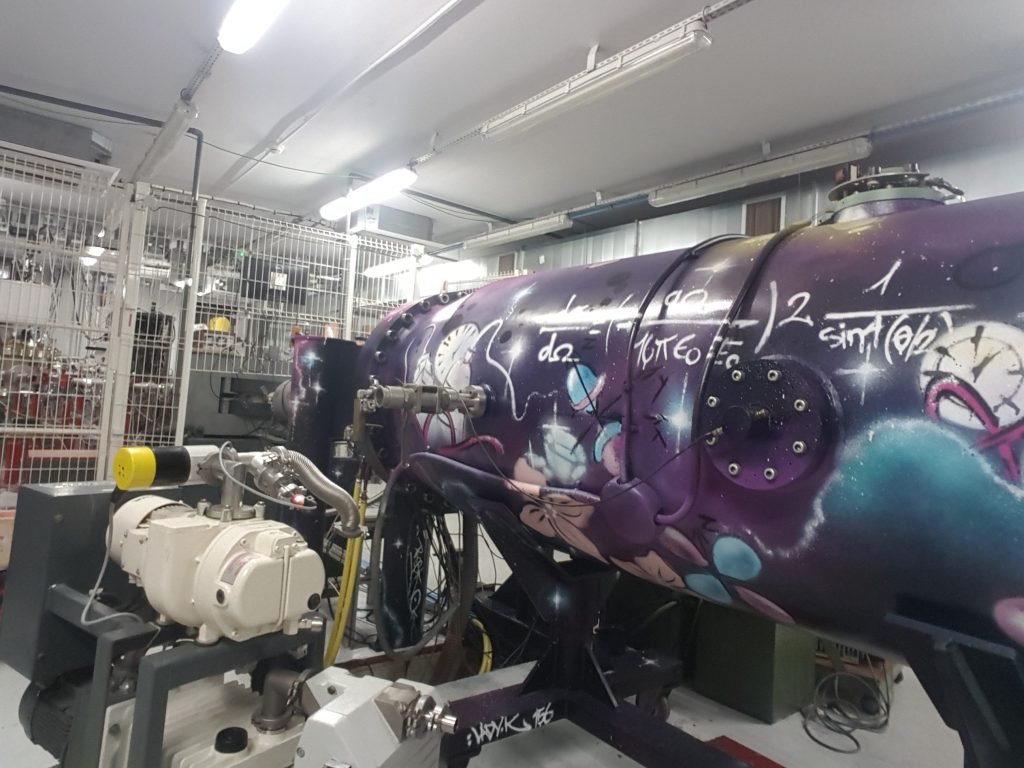
The SAFIR Platform is built around an electrostatic Van de Graaff accelerator and four dedicated analysis chambers, each equipped for one or more types of ion beam measurement.
Van de Graaff positive-ion accelerator
The accelerator is an AN-2000 electrostatic Van de Graaff, supplied by High Voltage Engineering Europa. It delivers parallel beams of singly charged, monokinetic ions (H⁺, D⁺, He⁺, C⁺, N⁺), in an energy range from 100 keV to 2.2 MeV. The experiment room is radiologically shielded, which allows deuteron beams to be used.
- Type: AN-2000 electrostatic Van de Graaff (High Voltage Engineering Europa)
- Available ions: H⁺, D⁺, He⁺, C⁺, N⁺ (singly charged, monokinetic)
- Energy range: 100 keV to 2.2 MeV
- Energy resolution: of the order of 100 eV at 1 MeV
- Beam divergence: 0.5 mrad
- Typical beam cross-section: 1 mm²
- Current: from 1 nA to a few µA
- Radiation protection: shielded experiment room, allowing the use of deuteron beams
Analysis chambers
Each chamber is optimised for one or more types of measurement, depending on its vacuum level and equipment.
Multipurpose chamber
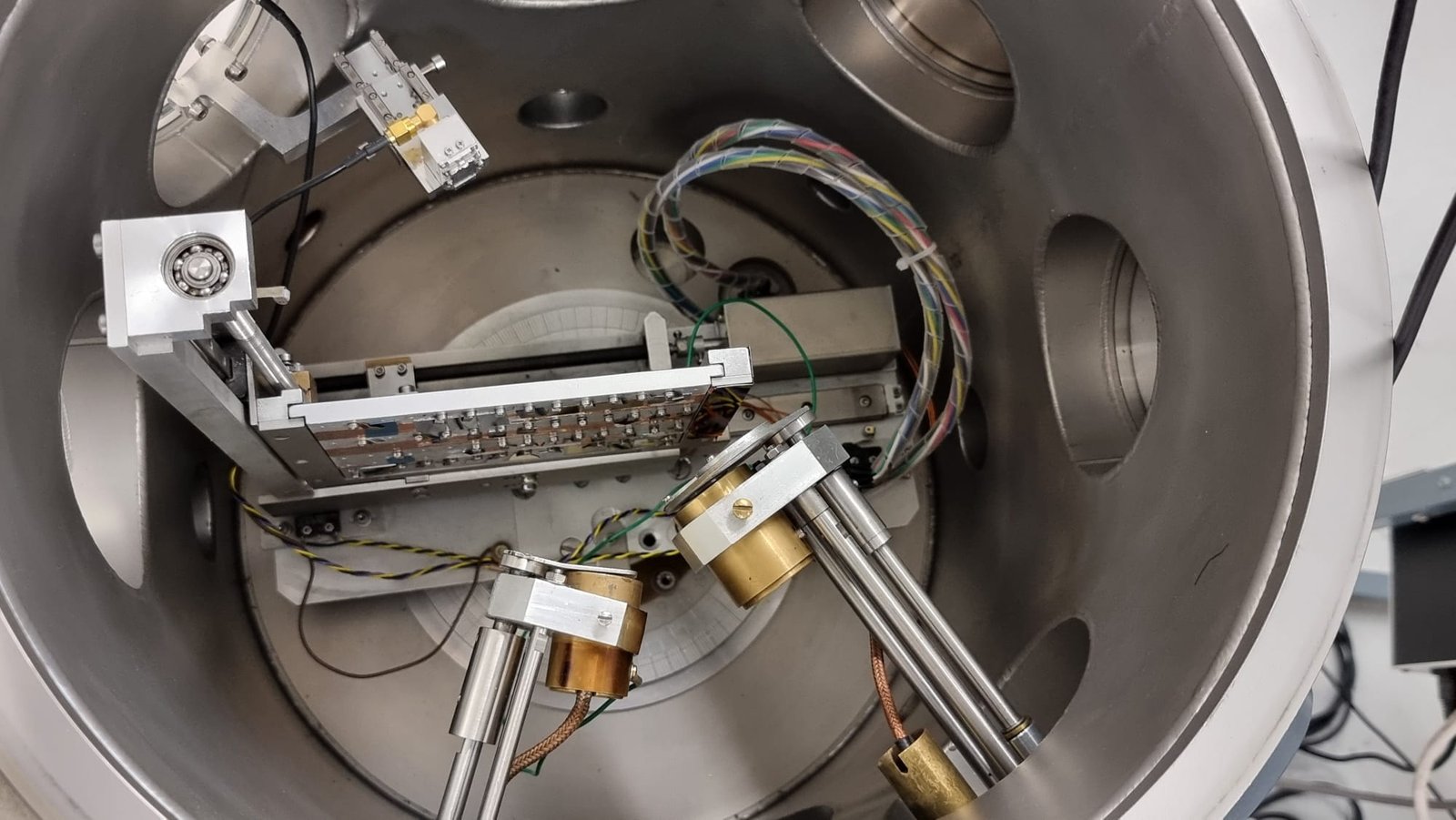
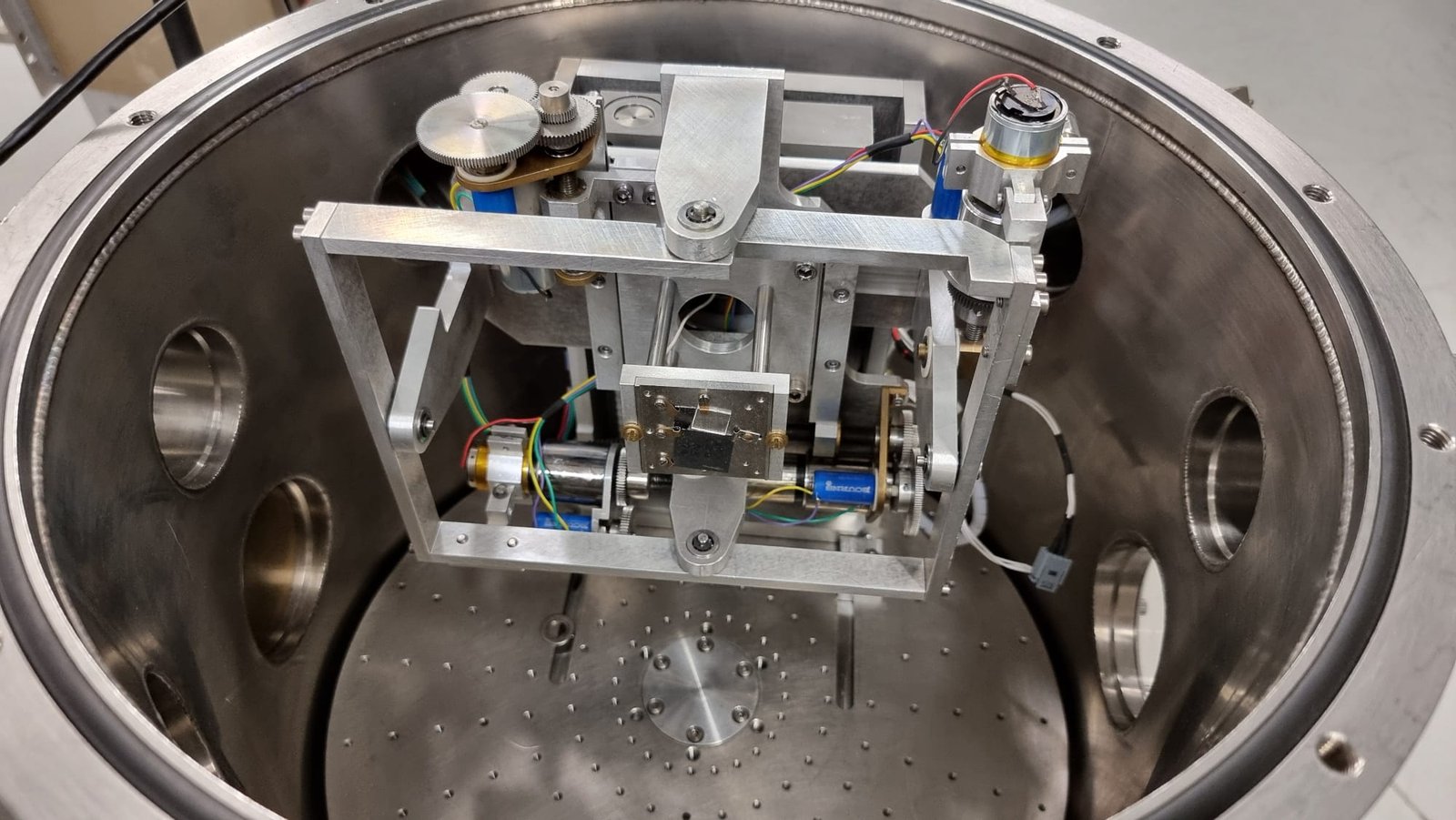
Multipurpose chamber under high vacuum (10⁻⁷ mbar) for routine RBS, NRA and NRP, equipped with a sample holder that can take up to 60 samples.
Goniometric chamber
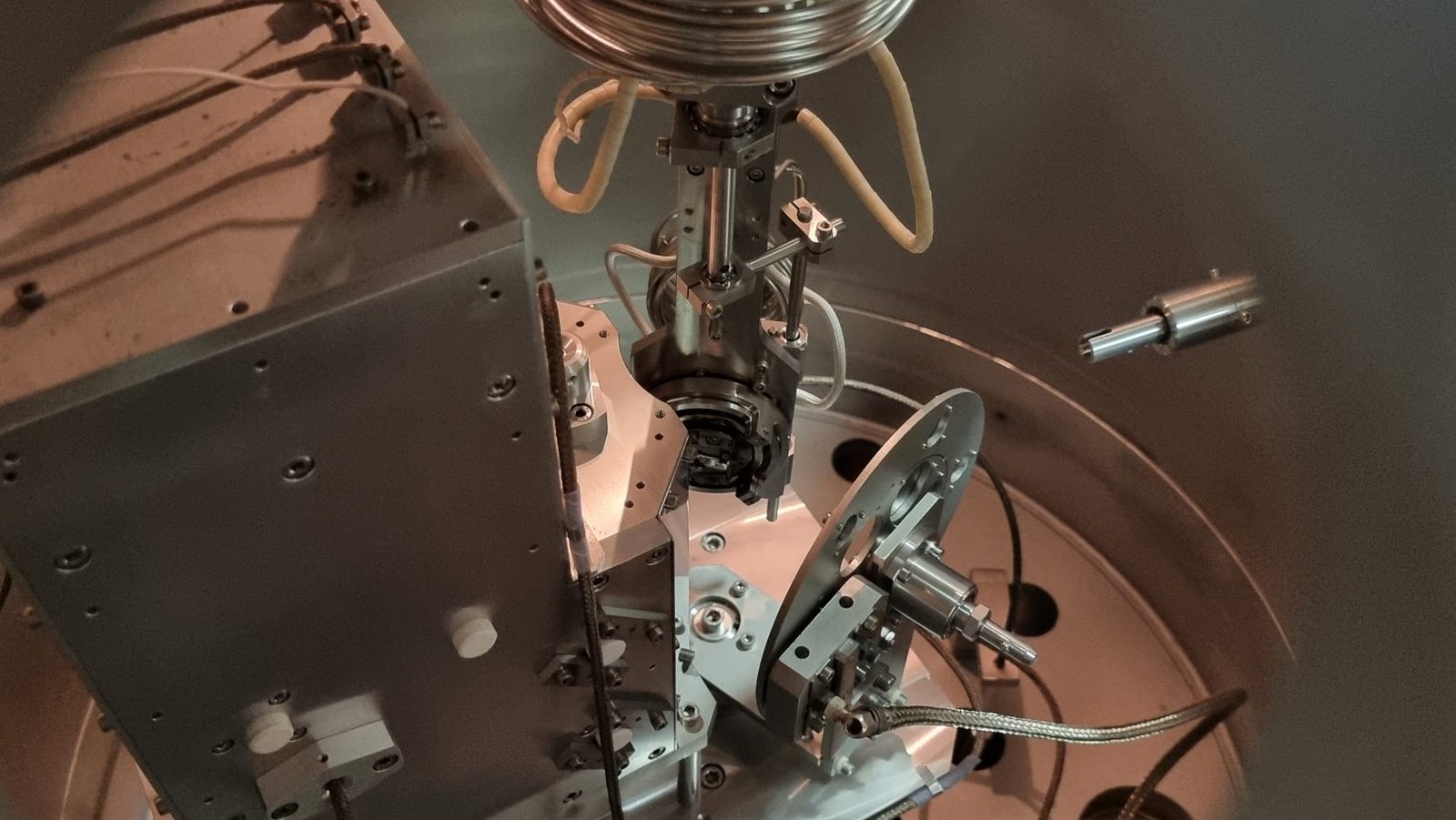
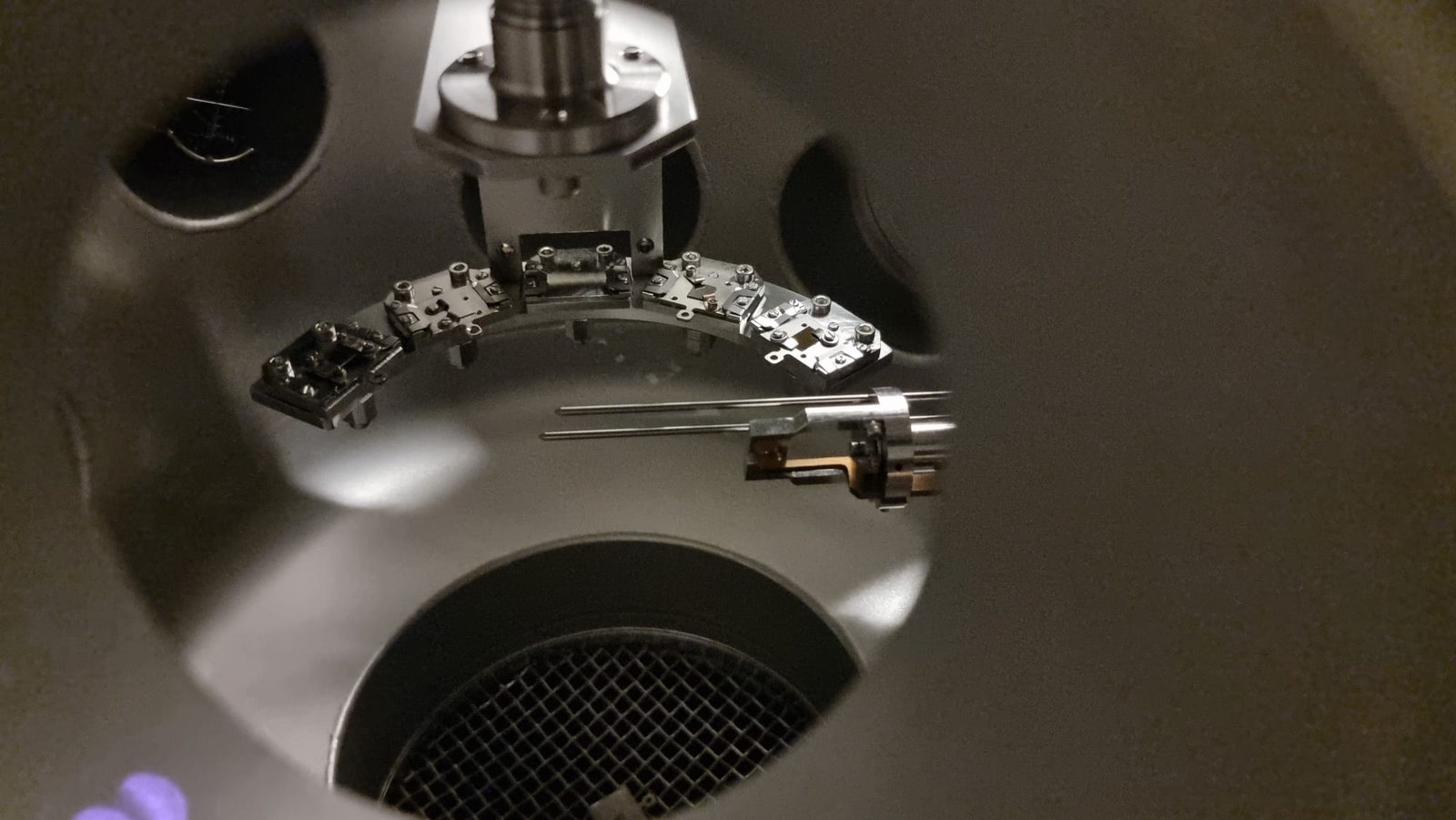
Goniometric chamber under high vacuum (10⁻⁷ mbar) dedicated to ion channelling studies, equipped for RBS, NRA and NRP.
MEIS chamber
Ultra-high-vacuum chamber (10⁻¹² mbar) dedicated to the MEIS setup (goniometer, toroidal electrostatic analyser, 2D detector), connected to a preparation chamber equipped with deposition tools (evaporators and an ion gun) and surface characterisation (LEED/Auger), and a variable-temperature goniometer (130 to 1000 K). RBS and NRA are already used there routinely; the toroidal electrostatic analyser specific to the MEIS technique is being recommissioned and is not yet available for routine measurements. More information and photos of the setup can be found on the MEIS page.
ERDA line and chamber under development
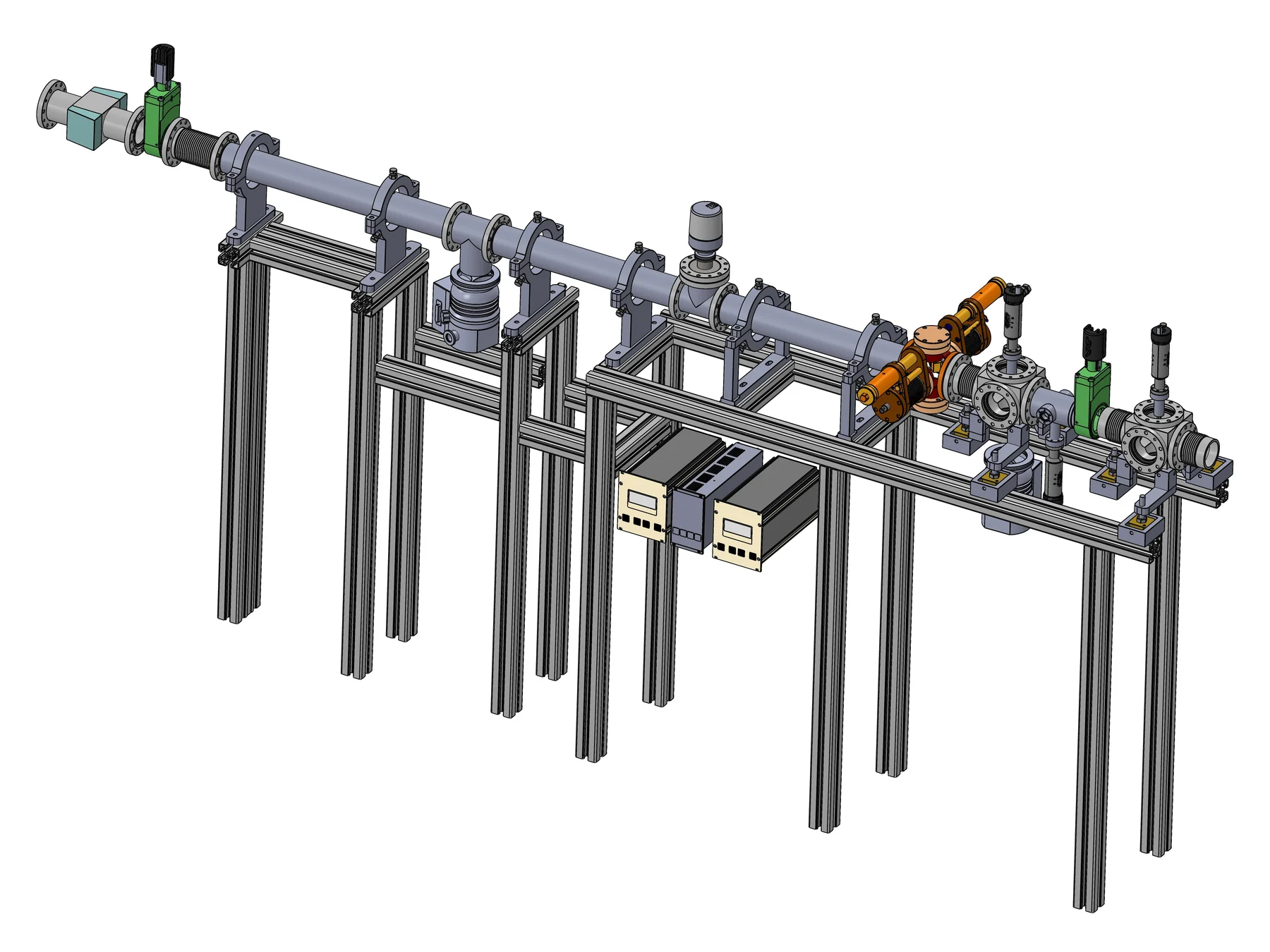
A new high-vacuum (10⁻⁷ mbar) line and chamber are being developed with a view to optimising studies by the ERDA method. This project is carried out as part of the PEPR SCIAM programme.
Design: S. Steydli