



MEIS (Medium Energy Ion Scattering) is an ion scattering technique using lower energy than RBS, coupled with a high-resolution electrostatic analyser, achieving very good depth resolution in the very first atomic layers.
Physical principle
MEIS, used at lower energy, analyses the scattered ions with a toroidal electrostatic analyser (TEA) coupled to a 2D microchannel-plate detector. The detector has a much better energy resolution, which gives a depth resolution clearly superior to that of RBS in the very first nanometres, with the added benefit of simultaneous angular detection, which provides information on crystal structure. The energy of the detected ions depends on:
- The depth of the collision (very little energy spread over such a short path, hence the very good surface resolution)
- The mass of the target atom (kinematic factor, as in RBS)
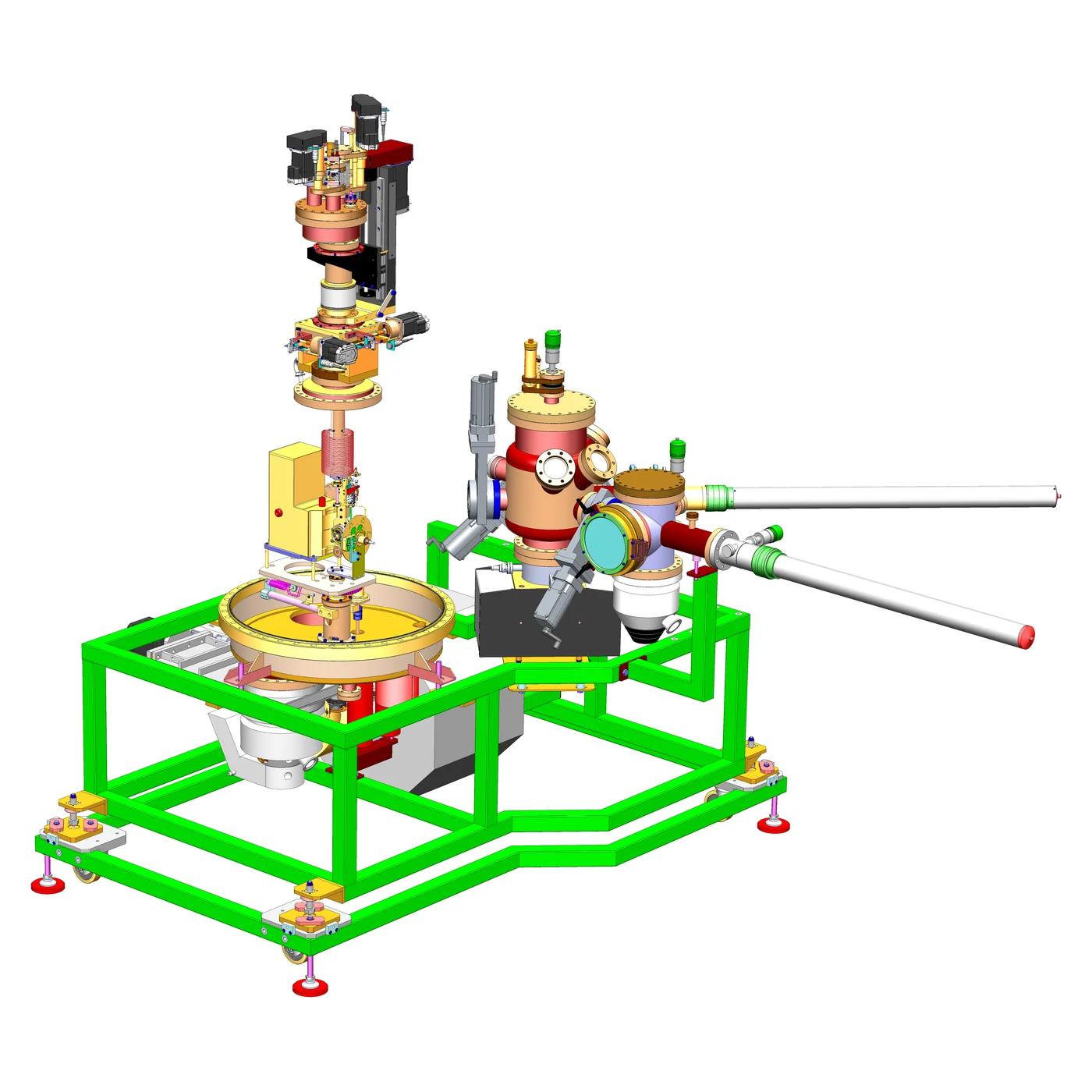
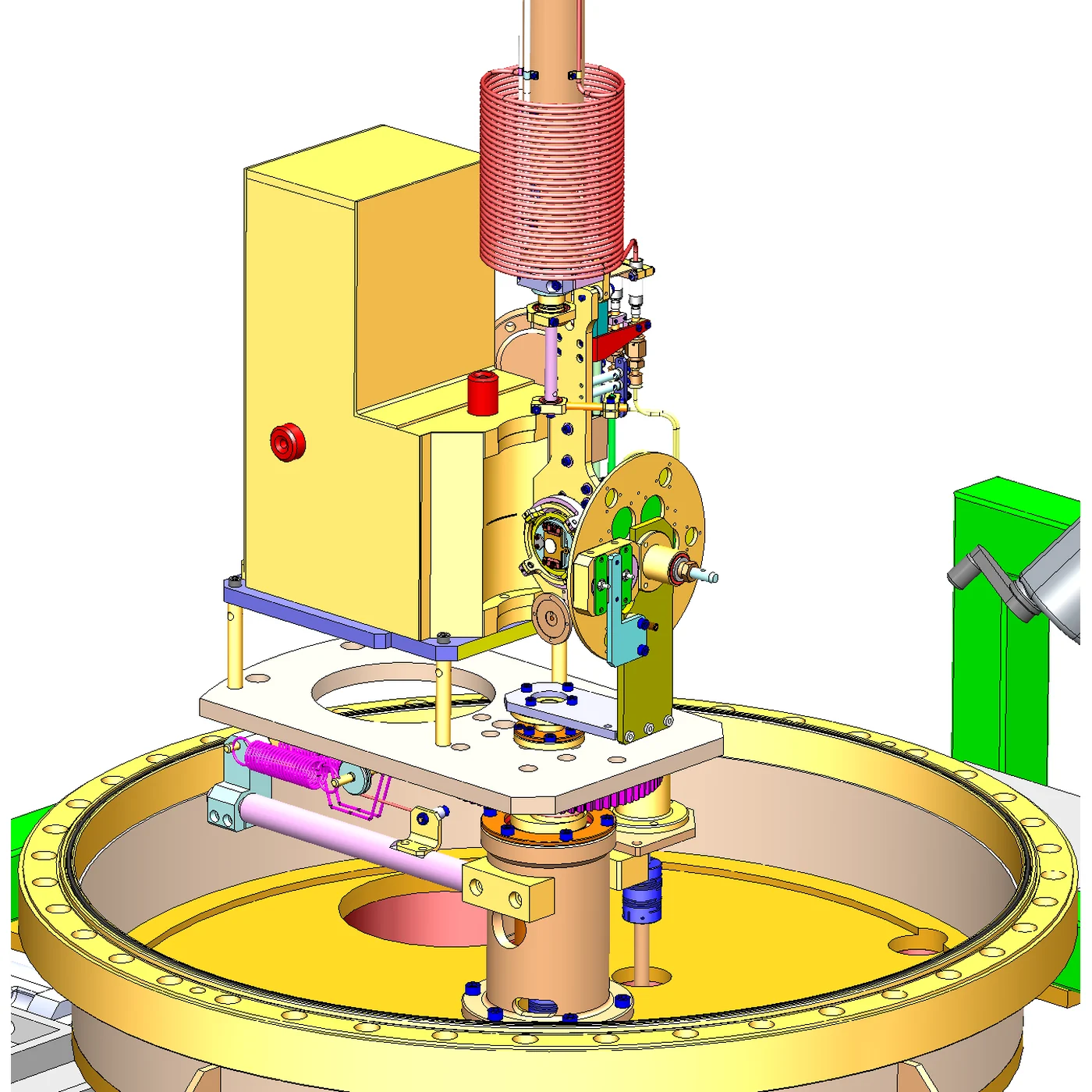
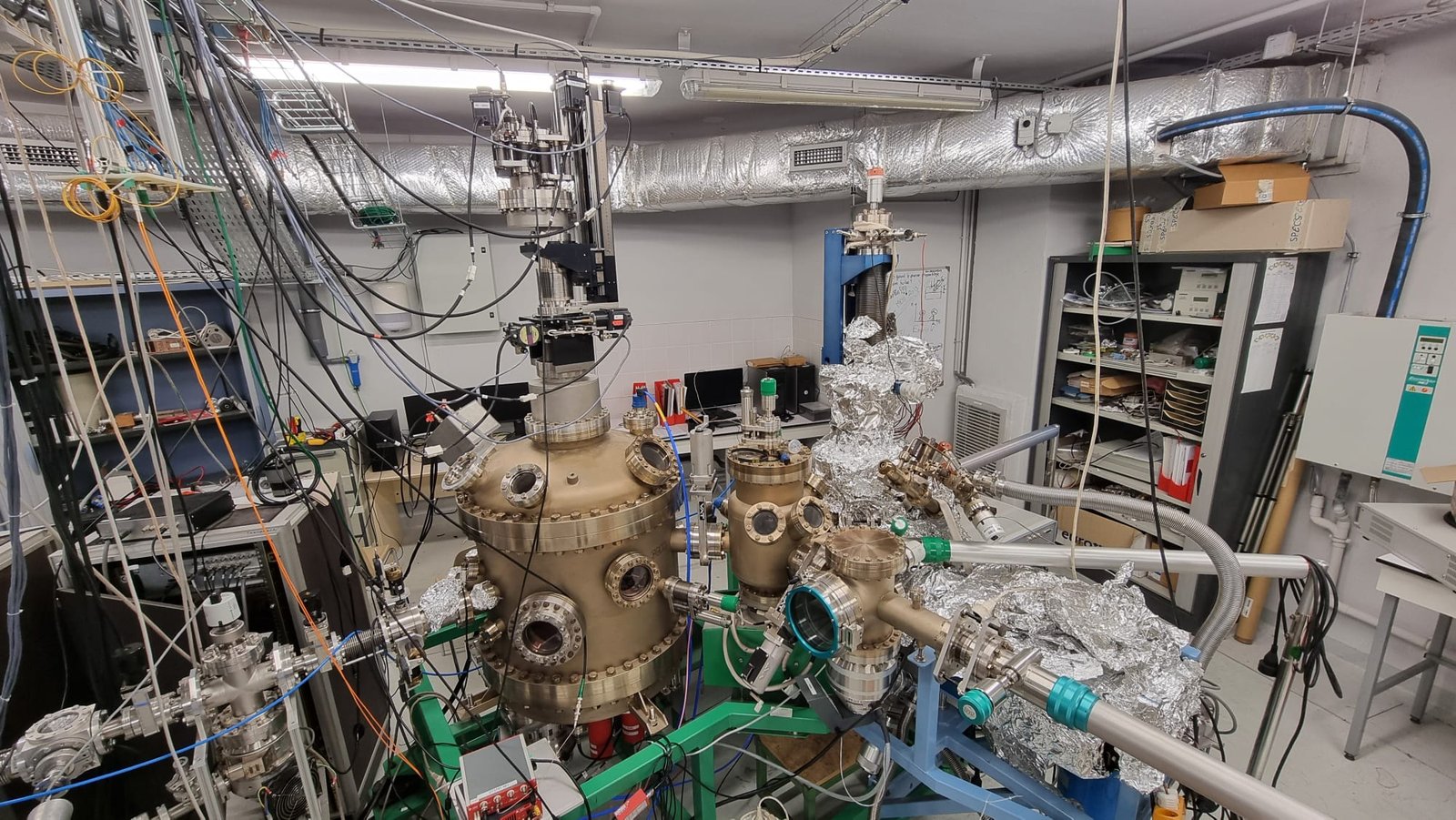
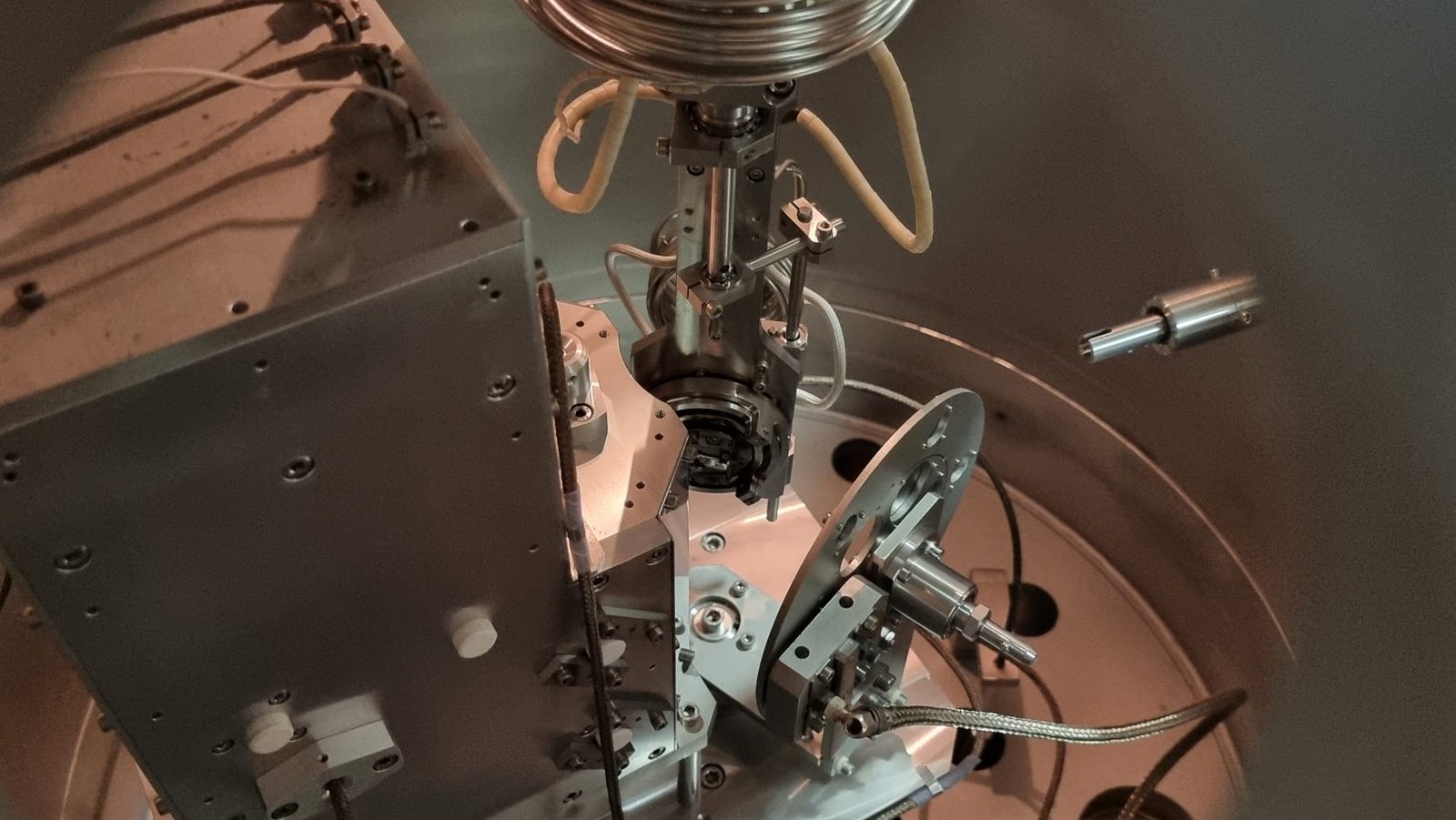
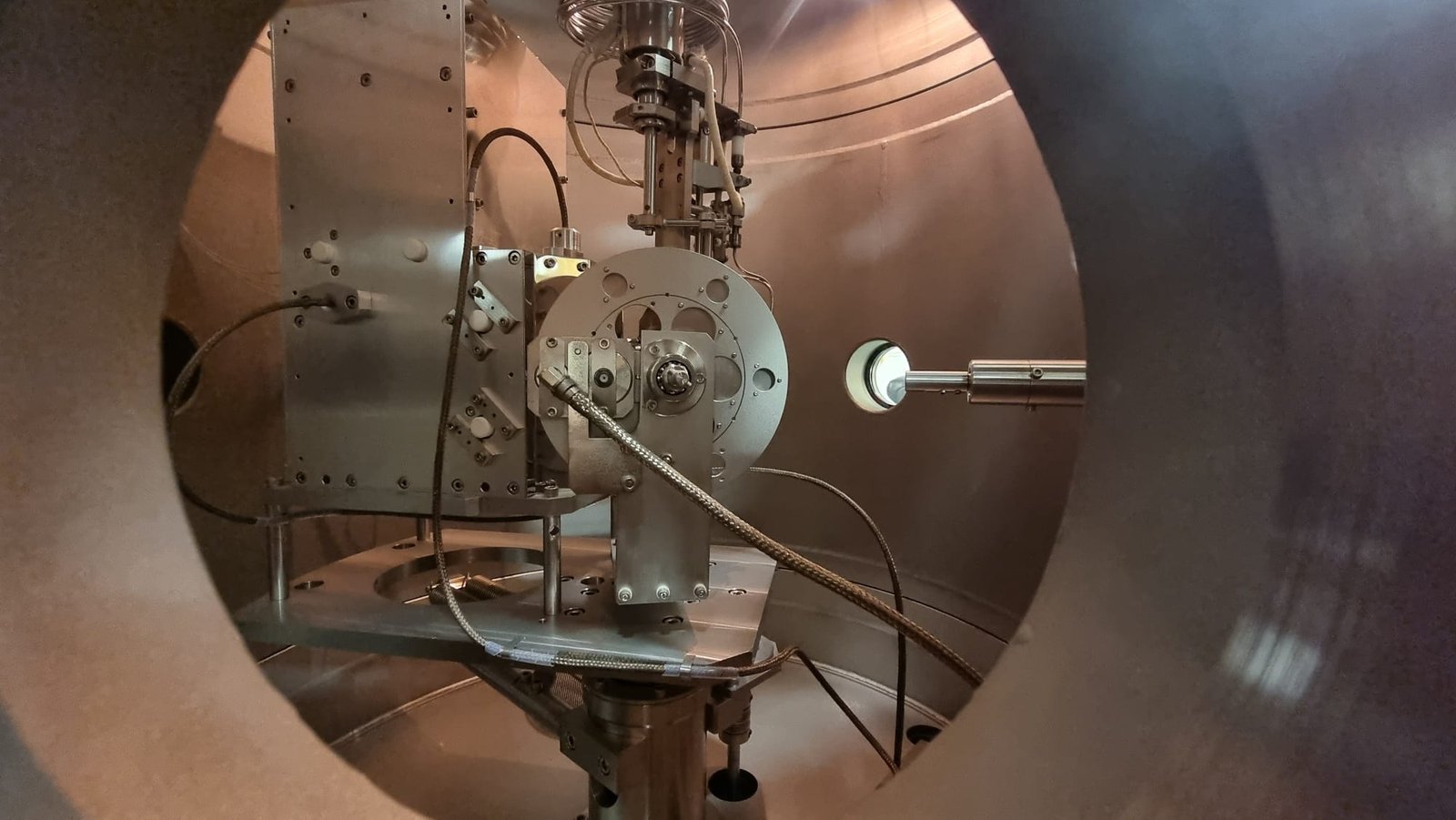
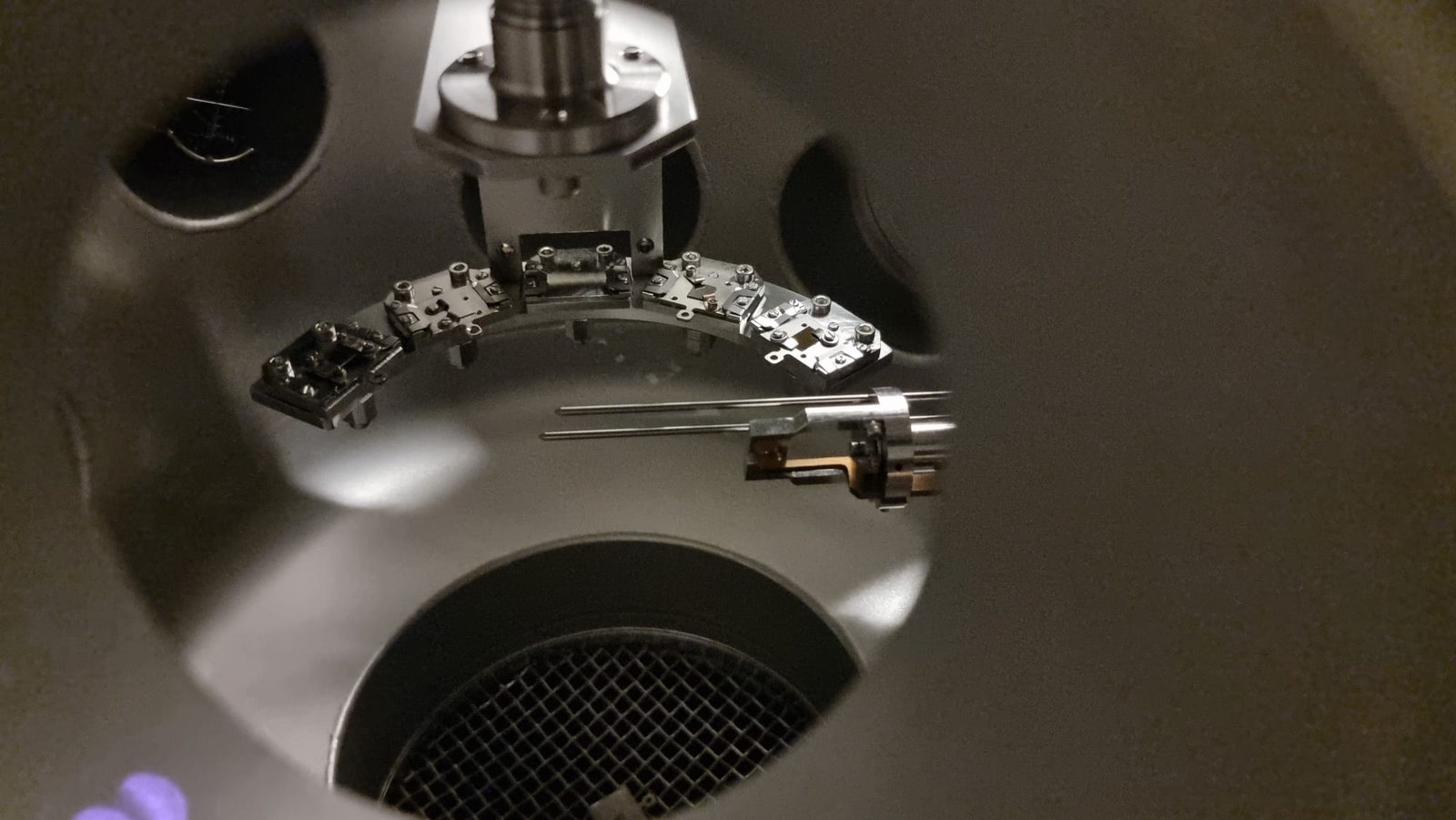
The MEIS analysis chamber combines a toroidal electrostatic analyser and silicon detectors for RBS and NRA, around a single sample-holder goniometer.
The setup in pictures
Technical characteristics
- Incident beam: protons (typically 300 keV), ⁴He⁺ and D⁺ can also be used
- Goniometer: 6 axes, sample temperature range from -180 °C to 800 °C
- Detector: toroidal electrostatic analyser (TEA) + 2D microchannel-plate detector (“backgammon” type)
- Measured energy resolution: 1.75 keV (versus ~15 keV for a conventional silicon detector used in RBS/NRA)
- Analysed depth: of the order of 20 nm, significantly less than conventional RBS (~500 nm), but with much higher resolution at the surface
- Simultaneous detection: in energy (composition profile) and in angle (crystal structure)
Advantages
- Very good depth resolution in the very first atomic layers
- Sensitivity to surface structure (reconstruction, atomic relaxation) thanks to simultaneous angular detection
- Usable in channelling/blocking geometry to probe surface crystalline order
- Chamber shared with conventional RBS/NRA detectors, to combine techniques without changing analysis chamber
Limitations
- Analysis depth limited to about twenty nanometres, versus the micron accessible in RBS
- Complex setup (high-voltage electrostatic analyser, 2D detector), more demanding to tune than RBS
- One sample analysed at a time, due to the small size of the sample holder
- The electrostatic analyser specific to this technique is currently being recommissioned and is not yet available for routine measurements; the analysis chamber itself can, however, be used routinely for RBS and NRA
Complementarity with other techniques
MEIS complements RBS for the fine study of the very first nanometres (interfaces, ultrathin layers), where the depth resolution of conventional RBS reaches its limits. On SAFIR, the MEIS analysis chamber also houses conventional RBS and NRA detectors, making it possible to combine techniques on the same sample.
Reference publication
A. Iwamoto, T. Okazawa, T. Akita, I. Vickridge, Y. Kido, “Two and/or three dimensional Au nano-clusters on oxide supports analyzed by high-resolution ion scattering”, Nuclear Instruments and Methods B, 2008. See on HAL